Global Flavors Japanese Teriyaki Salmon
Highlighted under: Cultural Flavors
I can still remember the first time I tasted teriyaki salmon while visiting Japan. The sweet and savory glaze combined with perfectly cooked fish left a lasting impression on me. Cooking this dish at home allows me to recreate that special moment. It’s always a hit during family dinners and gatherings. In this recipe, I’ll share my method for achieving that authentic teriyaki flavor, which is simple yet impressive. Get ready to bring the taste of Japan into your kitchen in just a few easy steps!
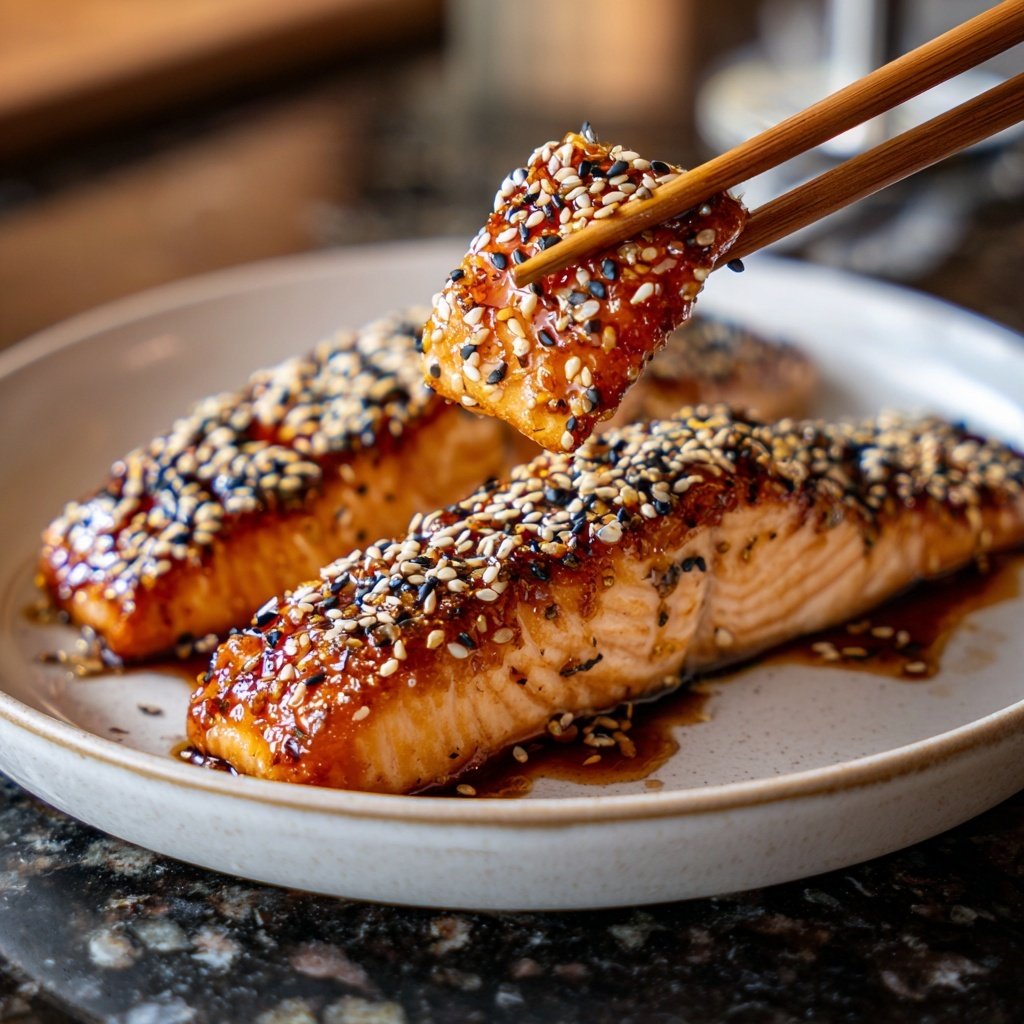
When I first made this teriyaki salmon at home, I was surprised by how easy it was to achieve the rich flavors reminiscent of my favorite Japanese restaurant. The key is in the marinade; I found that allowing the salmon to soak in the teriyaki sauce just the right amount of time truly enhances the taste. Trust me, it's worth the wait!
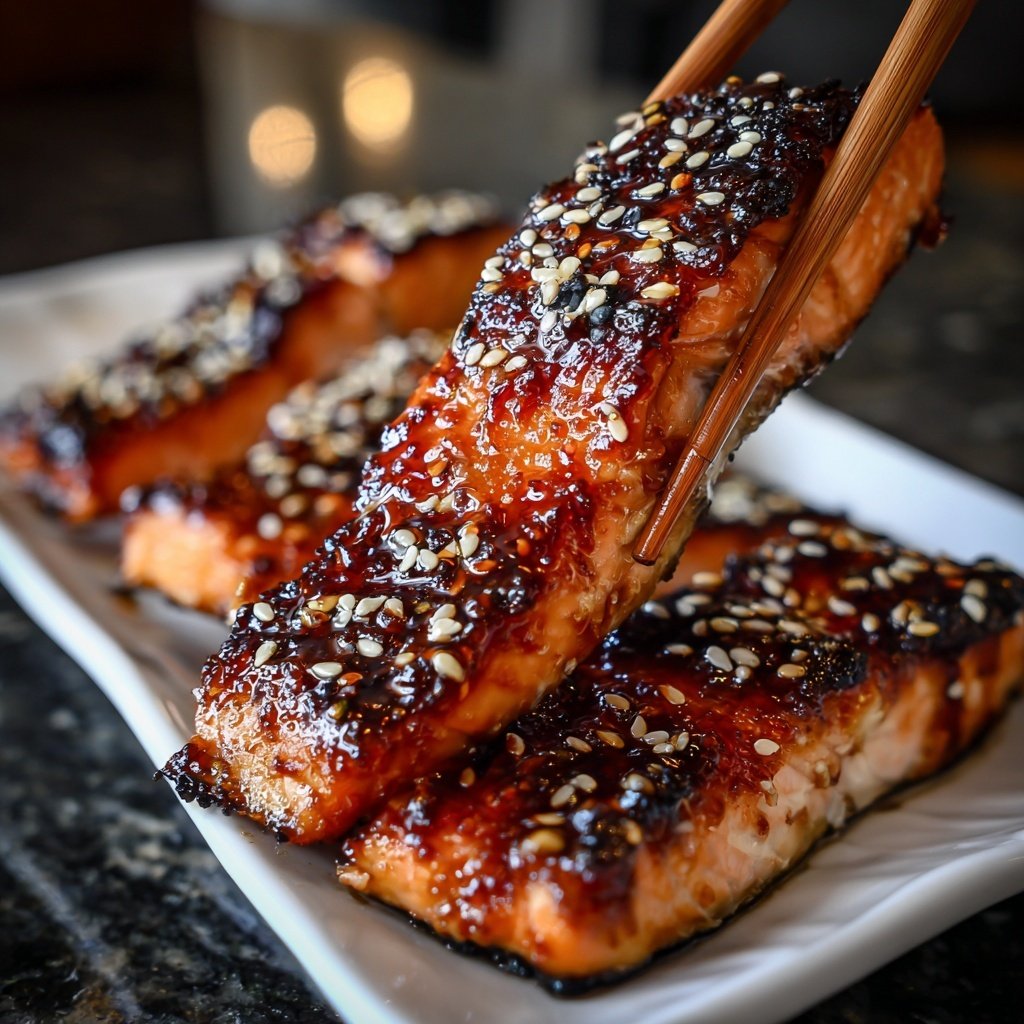
One of my favorite tips is to broil the salmon towards the end of cooking for a crispy finish on the outside while keeping the inside moist and flaky. It brings out the natural flavors of the fish and takes this dish to the next level. Enjoy this delicious meal with steamed rice and stir-fried vegetables for a complete experience.
Why You'll Love This Recipe
- Rich umami flavors balanced with sweetness
- Quick and easy preparation for any night of the week
- Healthy option packed with omega-3 fatty acids
Understanding Teriyaki Sauce
The foundation of this dish lies in the teriyaki marinade, a harmonious blend of soy sauce, mirin, and honey. Soy sauce adds that essential umami flavor, while mirin contributes a hint of sweetness and acidity that balances the saltiness. Honey not only enhances the glaze's sweetness but also helps achieve a beautiful caramelization when cooked. To ensure a well-rounded flavor, take care to whisk the marinade thoroughly to combine all ingredients fully before applying it to the salmon.
If you are looking for a healthier alternative to mirin, consider using sake mixed with a bit of sugar. This substitution will mimic the sweetness and depth of mirin while keeping the authentic flavor profile. Additionally, for a gluten-free version, opt for tamari instead of regular soy sauce. These adjustments can accommodate various dietary preferences without compromising the essence of the teriyaki flavor.
Perfectly Cooked Salmon
Cooking the salmon perfectly is crucial for achieving that melt-in-your-mouth texture. Begin by ensuring that the salmon is at room temperature before cooking; this helps it cook more evenly. When placing the fillets in the skillet, be sure to start with the skin-side down, which acts as a protective barrier. Cooking on medium heat allows the salmon to cook through without burning the glaze; keep an eye out for the edges turning golden brown as an indicator of readiness.
Once you flip the salmon, it should feel firm yet springy to the touch; this signifies that it is almost cooked through. To test for doneness, use a fork to gently flake the thickest part of the fillet. If it flakes easily and appears opaque, it’s ready. Avoid overcooking, as this can lead to a dry texture. A perfectly cooked teriyaki salmon should have a tender and juicy interior, leaving you craving more.
Ingredients
For the Teriyaki Marinade
- 1/4 cup soy sauce
- 1/4 cup mirin
- 2 tablespoons honey
- 1 tablespoon rice vinegar
- 2 cloves garlic, minced
- 1 teaspoon ginger, grated
For the Salmon
- 4 salmon fillets
- 1 tablespoon sesame oil
- Sesame seeds for garnish
- Chopped green onions for garnish
Instructions
Make the Marinade
In a bowl, whisk together soy sauce, mirin, honey, rice vinegar, garlic, and ginger until well blended. Set aside.
Marinate the Salmon
Place the salmon fillets in a shallow dish and pour the marinade over them. Let it marinate for at least 15 minutes, or up to 1 hour for more intense flavor.
Cook the Salmon
In a skillet over medium heat, add sesame oil. Once hot, add the marinated salmon fillets, skin-side down. Cook for about 6-7 minutes, then flip and cook for another 6-7 minutes, or until the salmon is cooked through.
Broil for Crispiness
Preheat the broiler. When the salmon is almost done, place it under the broiler for 2-3 minutes to achieve a crispy texture.
Garnish and Serve
Remove from the heat, garnish with sesame seeds and chopped green onions. Serve immediately with steamed rice and vegetables.
Pro Tips
- For an extra layer of flavor, you can add a touch of chili flakes to the marinade for a spicy kick. Also, using fresh ingredients will significantly improve the dish's overall taste.
Serving Suggestions
For a complete meal, serve your teriyaki salmon on a bed of steamed jasmine or basmati rice, which nicely absorbs the rich sauce. Pair it with stir-fried vegetables such as bok choy, bell peppers, or snap peas for added color and nutrition. A simple side salad with a sesame vinaigrette can also enhance the meal, offering a refreshing contrast to the savory flavors of the fish.
For an elegant presentation, consider using a carving board or a beautiful serving platter. Arrange the salmon fillets slightly apart, drizzling extra marinade over them for a glossy finish. Garnish generously with toasted sesame seeds and fresh chopped green onions, which add a delightful crunch and visual appeal.
Storage and Reheating Tips
If you have leftover teriyaki salmon, store it in an airtight container in the refrigerator for up to three days. Ensure to keep the salmon fillets and any remaining glaze separate to maintain their integrity. When you're ready to enjoy the leftovers, gently reheat them in a skillet over low heat to prevent drying out, adding a splash of water or broth if necessary to create steam.
For longer storage, you can freeze the cooked salmon by wrapping each fillet tightly in plastic wrap and then placing them in a freezer-safe bag. This method preserves the flavor for up to two months. To reheat frozen salmon, let it thaw in the refrigerator overnight before following the reheating tips mentioned above for the best results.
Questions About Recipes
→ Can I use other types of fish?
Yes, you can use other firm fish like trout or halibut, but cooking times may vary.
→ How long can I store the leftovers?
Leftovers can be stored in an airtight container in the fridge for up to 3 days.
→ Can I make the marinade in advance?
Absolutely, you can prepare the teriyaki marinade a day ahead and store it in the refrigerator.
→ Is this dish gluten-free?
You can make it gluten-free by using tamari instead of soy sauce.
Global Flavors Japanese Teriyaki Salmon
Created by: Elara Whitfield
Recipe Type: Cultural Flavors
Skill Level: Intermediate
Final Quantity: 4 servings
What You'll Need
For the Teriyaki Marinade
- 1/4 cup soy sauce
- 1/4 cup mirin
- 2 tablespoons honey
- 1 tablespoon rice vinegar
- 2 cloves garlic, minced
- 1 teaspoon ginger, grated
For the Salmon
- 4 salmon fillets
- 1 tablespoon sesame oil
- Sesame seeds for garnish
- Chopped green onions for garnish
How-To Steps
In a bowl, whisk together soy sauce, mirin, honey, rice vinegar, garlic, and ginger until well blended. Set aside.
Place the salmon fillets in a shallow dish and pour the marinade over them. Let it marinate for at least 15 minutes, or up to 1 hour for more intense flavor.
In a skillet over medium heat, add sesame oil. Once hot, add the marinated salmon fillets, skin-side down. Cook for about 6-7 minutes, then flip and cook for another 6-7 minutes, or until the salmon is cooked through.
Preheat the broiler. When the salmon is almost done, place it under the broiler for 2-3 minutes to achieve a crispy texture.
Remove from the heat, garnish with sesame seeds and chopped green onions. Serve immediately with steamed rice and vegetables.
Extra Tips
- For an extra layer of flavor, you can add a touch of chili flakes to the marinade for a spicy kick. Also, using fresh ingredients will significantly improve the dish's overall taste.
Nutritional Breakdown (Per Serving)
- Calories: 380 kcal
- Total Fat: 26g
- Saturated Fat: 15g
- Cholesterol: 195mg
- Sodium: 85mg
- Total Carbohydrates: 32g
- Dietary Fiber: 3g
- Sugars: 24g
- Protein: 6g